
Search


- Categories
-
Hammered Bar & Tubing
-
Balusters & Pickets
-
Forged Steel Scrolls and Panels
-
Ornamental Wrought Iron
-
Ornamental Cast Aluminum
-
Hardware & Supplies
-
Security Screen Doors
- Custom Services - Build to Order
-
-
-

Twisted


Popular Questions with Answers
-
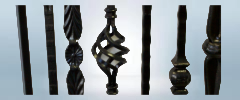
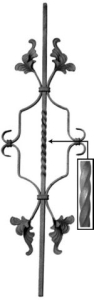
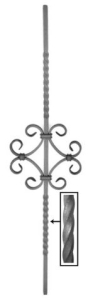
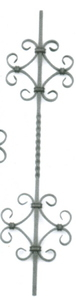
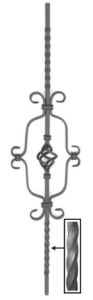
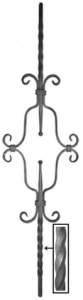
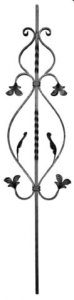
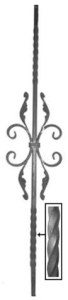
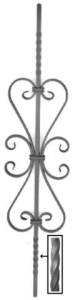
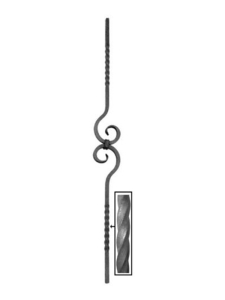
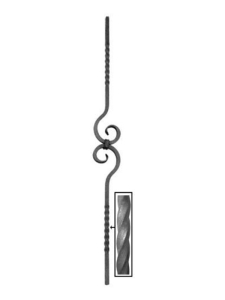
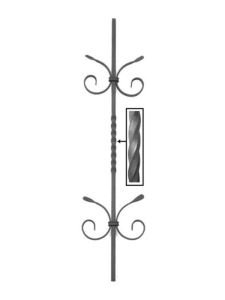
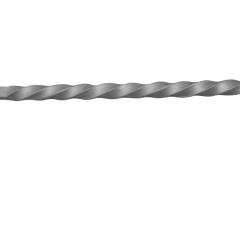
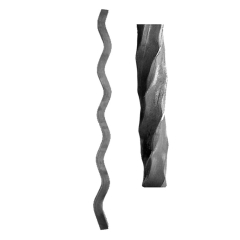
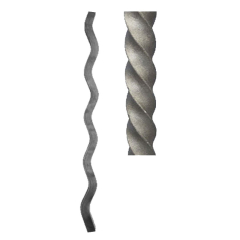
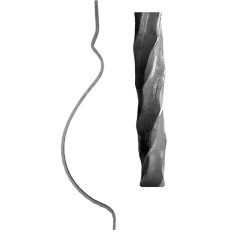
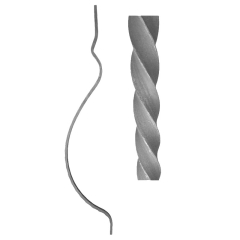
Twisted balusters are produced by heating a length of square or round bar stock and then mechanically rotating one end relative to the other while the metal is malleable. The number of twists per foot, the bar size, and the pitch of the twist can all be varied to produce different visual effects, from a tight spiral to a gentle open rotation.
-
Twisted balusters are extremely versatile and appear in Colonial, Victorian, traditional, and transitional residential design as well as in Mediterranean and Spanish Revival styles. A tighter twist reads more ornate and formal; a looser twist feels lighter and more casual. They are commonly mixed with straight or belly balusters in a repeating pattern.
-
Yes. Twisted balusters are cut from the bottom end, leaving the decorative top intact. The cut end goes into the base shoe or is inserted into the bottom rail, so the cut mark is concealed. Solid twisted bars require a chop saw; twisted tube stock cuts more easily.
-
Yes. Twisted square pickets are a popular choice for ornamental fence panels, gates, and courtyard enclosures. In fence applications, they are typically welded into horizontal rails and may be combined with spear tops, finials, or collar accents for a finished look.