
Search


- Categories
-
Hammered Bar & Tubing
-
Balusters & Pickets
-
Forged Steel Scrolls and Panels
-
Ornamental Wrought Iron
-
Ornamental Cast Aluminum
-
Hardware & Supplies
-
Security Screen Doors
- Custom Services - Build to Order
-
-
-

Forged










Popular Questions with Answers
-
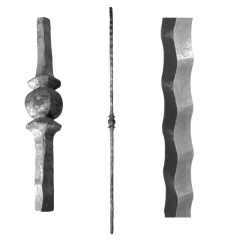
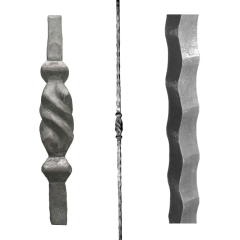
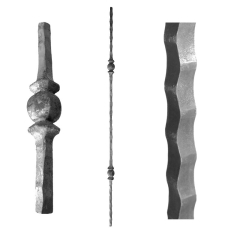
Forged balusters are shaped under high heat and pressure using dies or presses, which compresses and works the steel into the desired form. This process can create smooth knuckles, tapered sections, collar details, or textured surfaces that would be impossible to achieve by bending alone. The result is a denser, more detailed surface compared to plain bar stock.
-
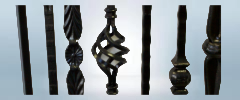
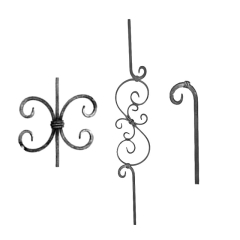
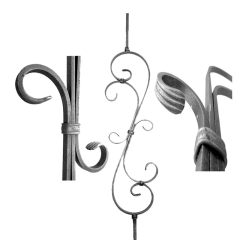
Common forged details include knuckles (raised nodes pressed into the bar), tapered ends, cage formations, collar accents, and basketweave sections. Some forged bars have a fully smooth profile with elegant tapering, while others combine a hammered texture with forged decorative elements.
-
Yes. Many forged baluster styles — particularly those with clean knuckles and minimal ornamentation — work well in transitional, Craftsman, and even modern-industrial design contexts. The key is selecting a forged style with restrained detail rather than heavily ornate scrollwork.
-
Yes. Solid forged balusters weld easily to steel top and bottom rails using MIG or TIG welding. Forged cast iron decorative elements require a different approach — cast iron can be welded with nickel-based rod or bonded with a structural metal epoxy for non-structural repairs. Confirm the material composition of your specific baluster with us if welding is a critical part of your installation.